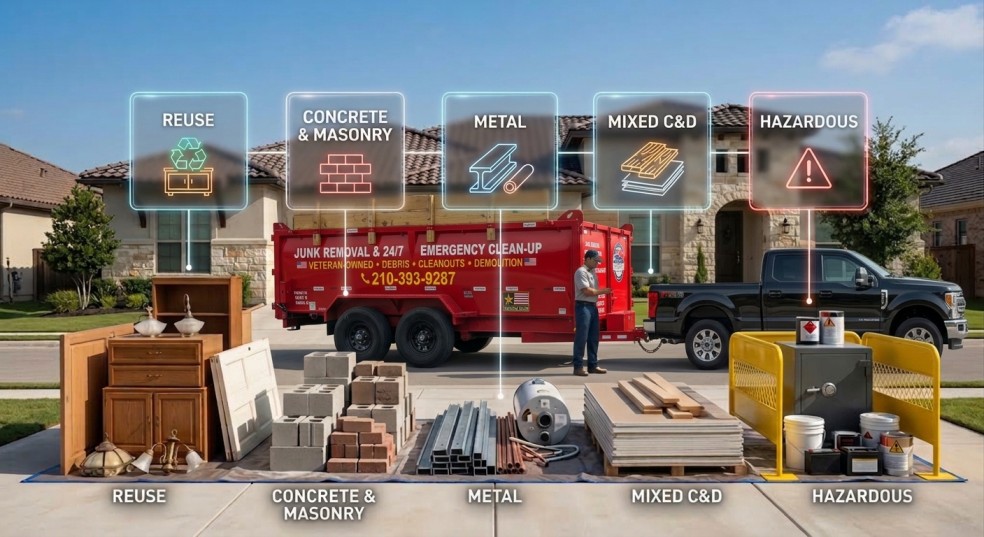

Construction debris removal cost in San Antonio depends mostly on what you’re throwing away, not how much space it takes up. A truckload of drywall and a truckload of broken tile look similar, but the tile can weigh several times more, and weight drives disposal fees. Your final price comes from the material mix, total weight, where the debris sits on the property, how hard it is to load, and what the disposal facility charges for that load. Because San Antonio’s curbside programs exclude construction material and its drop-off centers accept only small amounts, most remodeling, roofing, and demolition projects need a private hauler or a dumpster.
This guide is for homeowners, landlords, property managers, and contractors who are planning a project or already have a debris pile. It explains what you’re paying for so you can compare quotes, plan the job, and avoid surprise charges.
Key Takeaways
- Construction debris is usually priced by weight, so dense materials like tile, concrete, shingles, and soil cost more than their size suggests.
- A mixed load is often priced by its heaviest material. Keeping concrete or tile separate from lighter debris can keep costs predictable.
- San Antonio’s curbside bulky and brush collection programs do not accept construction or roofing debris, and setting it out can lead to fines.
- Asbestos, lead paint, and chemicals need testing or specialized handling before a standard hauler can remove debris.
- Before work starts, confirm in writing whether your contractor’s quote includes debris removal and disposal fees.
What Construction Debris Removal Costs in San Antonio
No honest hauler can give you one number for construction debris removal. A bathroom tear-out and a new-build cleanup can fill the same truck and still produce very different bills. Here’s how pricing works so the quotes you get make sense.
Most junk removal pricing starts with volume, meaning how much of the truck the load fills. That works for couches, mattresses, and household clutter, because those items are bulky but fairly light. Construction debris doesn’t follow that pattern. Much of it is dense, and density changes the math.
Why Construction Debris Is Priced by Weight, Not Truck Space
When a hauler drops a load at a transfer station or landfill, the facility weighs the truck and charges by the ton. Those tipping fees are a real cost, and they rise with weight.
A trailer full of old cabinets might weigh a fraction of what the same trailer full of concrete weighs. The hauler pays the facility based on the scale, not the space, so construction debris pricing tracks weight. Trucks and trailers also have legal and mechanical weight limits. A dense load can reach that limit well before the bed looks full.
This means a quote based only on a photo or a rough measurement may change once the actual material is known. A good estimate asks what the debris is, not just how much of it there is.
When a Quarter Load Costs More Than a Full One
This surprises many homeowners. A small pile of concrete chunks, pavers, or mortared tile can cost more to remove than a truck full of drywall scraps and lumber offcuts.
The small pile may fill only a quarter of the bed, but it could weigh as much as, or more than, the full load of lighter material. It takes more tonnage at the facility and more physical effort to load. If your quote for a “small” pile of heavy debris seems high, weight is usually the reason.
Cost by Material: What You Are Actually Hauling
The type of material is the biggest single factor in your price. This table shows how common construction debris tends to price relative to other materials.
| Material | How It Prices | Why |
| Drywall and gypsum | Moderate, priced closer to volume | Bulky and light, so it fills a truck before it hits a weight limit |
| Wood, lumber, and framing | Moderate | Awkward lengths take up space, but weight stays manageable |
| Tile and flooring | High for the volume | Dense and heavy, especially with mortar or backer board attached |
| Roofing shingles | High, and almost always by weight | One square of asphalt shingles weighs a few hundred pounds |
| Concrete, brick, and masonry | Highest per cubic yard | Extremely dense, and most facilities charge a separate rate for it |
| Dirt, soil, and sod | High, and often restricted | Heavy, and city drop-off centers will not accept it at all |
| Mixed remodel debris | Priced on the heaviest material in the load | One layer of tile can reprice the whole truck |
| Fixtures, cabinets, and countertops | Moderate to high | Stone countertops price like masonry, cabinets like lumber |
If your project produces mostly one light material, like drywall from an interior wall, pricing tends to be simpler. Projects that produce tile, masonry, roofing, or soil need a more careful estimate.
Why Mixing Materials Costs You More
When heavy and light debris go into one pile, the load is usually priced on its heaviest component. A pile of lumber and drywall with broken tile and mortar scattered through it no longer prices like a lumber load.
Mixing also affects disposal. Some facilities charge different rates for clean concrete, clean wood, and general mixed construction waste. Some accept certain clean materials for recycling or reuse, but mixed loads may not qualify. Once materials are combined, those options may disappear.
Separating Heavy Debris Before Pickup
If your crew or contractor is generating debris over several days, keeping heavy materials in their own pile can help. Concrete, brick, tile, and soil can go in one area. Drywall, lumber, trim, and packaging can go in another.
Separation lets the hauler estimate each material accurately and route it to the right facility. It isn’t required, and it won’t guarantee a lower price, but it usually makes the quote clearer and reduces the chance of a mid-job price change.
Only separate debris you can move safely. Don’t try to lift heavy slabs, handle debris with exposed nails or broken glass without protection, or disturb material that may contain asbestos or lead paint. The hauling crew can handle the loading.
What Changes Your Final Price
Material type sets the baseline, but these factors can raise or lower the final bill.
Material Weight and Density
This follows from everything above. The same volume of material can vary widely in weight. Wet material weighs more than dry, so drywall or soil that has been rained on can cost more than the same debris kept covered. Roofing tear-offs with multiple shingle layers weigh more than single-layer roofs. Tile removed with its mortar bed and backer board weighs much more than tile alone.
When you request a quote, be specific. “Bathroom debris” tells a hauler very little. “Tile floor with mortar bed, one vanity, one tub surround, and some drywall” tells them what they need to know.
Where the Debris Sits on the Property
A pile in the driveway next to where the truck parks is the easiest job. Costs can rise when debris is:
- inside the house, such as a gutted bathroom on the second floor
- in a backyard with a long carry to the street
- behind a gate too narrow for a wheelbarrow
- in a basement, attic, or upstairs unit reached only by stairs
- spread across several areas of a large job site
Every trip from the pile to the truck adds labor time. Stairs, long walks, and tight hallways all add to that time.
Loading Difficulty and Job Site Conditions
Some debris is simple to pick up. Other debris needs extra work before it can go on a truck. Long boards may need cutting. Large concrete pieces may need breaking into manageable sizes. Debris tangled with wire, nails, or rebar takes longer to load safely.
Site conditions matter too. Muddy ground, limited parking, active work crews, low branches, or no clear truck access can all slow the job. If the site is hard to reach, mention it when you request an estimate so the quote reflects reality.
Disposal and Tipping Fees at the Facility
Once debris is loaded, it still needs somewhere to go. Transfer stations and landfills charge for accepting material, usually by weight, and rates can differ by material type. Some materials go to separate facilities, which can add travel time.
A reputable hauler builds these fees into the quote or explains how they’re handled. When comparing quotes, ask whether disposal is included. A low labor price with disposal billed separately may end up costing more than a higher all-in quote.
Why San Antonio Will Not Take Your Construction Debris
Many homeowners assume they can put remodel debris out with bulky trash or haul it to a city drop-off center. For most construction projects, that isn’t a workable option. The city’s rules restrict construction material in several ways.
| Disposal Route | Construction Debris Status | What This Means |
| Curbside bulky item collection | Not accepted, and neither is roofing material | Setting it out can bring a fine of up to $2,000 per day plus collection charges |
| Curbside brush collection | Construction, roofing, and demolition material all excluded | Mixing it into a brush pile carries the same fine |
| Bulky waste drop-off centers | Limited to one cubic yard of construction material and lumber | Boards longer than ten feet are refused |
| Concrete, soil, and rocks at drop-off centers | Not accepted at all | There is no free municipal route for these materials |
| Private transfer stations and landfills | Accepted, charged by the ton | You need a truck, and tonnage adds up quickly |
| Private hauler or dumpster | The practical route for most projects | Weight limits still apply, so material mix matters |
City programs and limits can change, so check the City of San Antonio’s current Solid Waste Management guidelines before relying on any municipal option.
The One Cubic Yard Limit and Why It Runs Out Fast
One cubic yard is a cube about three feet on each side. That sounds like a fair amount until you start a real project. A small bathroom demo with a tub surround, vanity, and flooring can easily produce more than that. So can a single room of drywall or a short run of fence.
You also have to transport the debris yourself, in a vehicle that can safely carry the weight, and sort out anything the center won’t take. For a small repair, that may be manageable. For a remodel, the limit is usually used up before the job is half done.
When a Hauler Is Effectively Your Only Option
A private hauler or dumpster becomes the realistic choice when:
- the project produces more than a cubic yard of debris
- the load includes concrete, brick, pavers, soil, or rocks
- roofing material is involved
- lumber is longer than drop-off limits allow
- you don’t have a truck or trailer rated for the weight
- You don’t have time to make multiple trips and wait in line
At that point, the decision is usually between renting a dumpster and loading it yourself, or hiring a crew to load and haul the debris. A dumpster needs space on your property, time and labor to fill, and attention to weight limits. A hauling crew handles the labor and loading and removes the debris in one or more trips. Neither is always cheaper. The right choice depends on project size, timeline, material type, and whether you or your contractor can do the loading.
If you want a crew to handle it, American Valor Waste’s construction debris removal service is built for this kind of project.
Cost by Project Type
Different projects create different debris profiles. This table shows what typically comes out of common jobs and what usually drives the cost.
| Project | Typical Debris Profile | Cost Driver |
| Bathroom remodel | Tile, fixtures, drywall, vanity | Dense tile and mortar in a small volume |
| Kitchen remodel | Cabinets, countertops, flooring, appliances | Stone countertops and appliance weight |
| Roofing tear-off | Asphalt shingles, underlayment, nails | Pure weight, priced by the ton |
| Flooring replacement | Carpet, tile, laminate, subfloor | Depends entirely on what came up |
| Interior demolition | Mixed drywall, framing, trim | High volume, moderate weight |
| Concrete or patio removal | Slab, brick, pavers | The most expensive material per yard |
| New construction cleanup | Offcuts, packaging, scrap | Volume-driven, lighter than demolition |
| Deck or fence teardown | Treated lumber, posts, concrete footings | Footings turn a light job into a heavy one |
Some patterns stand out. Bathrooms produce less debris than kitchens but can cost as much or more because tile and mortar are heavy. Flooring jobs vary widely: carpet and pad are light, while tile set in mortar is heavy. Deck and fence teardowns seem light until someone pulls out the posts and finds concrete footings attached.
When you describe your project for a quote, include the project type and the specific materials involved.
Materials That Need More Than a Hauler
Some materials found during construction and renovation can’t go out as ordinary debris. They may need testing, abatement, or disposal through specialized programs. Identifying these early protects your health and your budget.
Asbestos in Pre-1980s San Antonio Homes
Asbestos was used in many building products for decades, including some popcorn ceilings, vinyl floor tiles and their adhesive, pipe insulation, joint compound, siding, and roofing materials. Many older San Antonio homes were built while these products were still common.
Asbestos-containing material is generally not a hazard when left undisturbed. The risk comes when it’s cut, sanded, broken, or torn out, which releases fibers. Suspected asbestos should be tested by a qualified professional before demolition, and confirmed material must be removed by licensed abatement professionals under Texas and federal rules. Standard junk removal and hauling crews don’t perform asbestos abatement.
Lead Paint and Older Renovations
Homes built before 1978 may have lead-based paint on walls, trim, windows, doors, or exterior surfaces. Sanding, scraping, or demolishing painted surfaces can create lead dust, which is especially dangerous for children and pregnant people.
Renovation work that disturbs lead paint in older homes is subject to federal lead-safe work practice requirements for contractors. If your home is older and painted surfaces are coming out, ask your contractor about lead testing and lead-safe practices before work begins.
Paint, Solvents, and Chemicals on the Job Site
Renovation sites often collect leftover paint, stains, adhesives, sealants, thinners, and cleaning products. Many of these can’t go in a load of construction debris. Liquid paint and chemicals may need to go through a household hazardous waste program or another approved disposal route.
Tell your hauler about any containers on site before pickup. Don’t open, combine, or pour out unknown containers. Keep them upright, closed, and set apart from the debris pile.
What to Test Before You Start Demolition
If your home is older, or you aren’t sure what’s in the walls, floors, or ceilings, talk with a qualified inspector before demolition about:
- asbestos testing for ceilings, flooring, insulation, siding, and roofing
- lead testing for painted surfaces in pre-1978 homes
- a walk-through to identify leftover chemicals, fuels, or containers
Testing costs money up front, but it can prevent contaminated debris, stopped projects, and much larger cleanup costs later.
Who Pays for Debris Removal: You or Your Contractor?
This is one of the most common sources of surprise costs in a remodel. Homeowners often assume the contractor handles debris. Sometimes that’s true, sometimes it’s partly true, and sometimes it isn’t in the contract at all.
What a Contractor’s Quote Usually Covers
Contractor quotes vary. Some include a dumpster and all disposal fees. Some include removing only the debris their crew creates, but not old items you’ve added to the pile. Some cover hauling but bill disposal fees separately. Others leave debris removal to the homeowner.
No single approach is standard, so check your quote instead of assuming.
What to Confirm in Writing Before Work Begins
Before the project starts, ask your contractor to state in writing:
- whether debris removal is included in the price
- whether disposal and tipping fees are included or billed separately
- whether a dumpster will be placed on your property, and where
- who handles materials found mid-project, such as suspected asbestos
- whether old items you add, like furniture or yard waste, will be removed
- whether a final site cleanup is included when the work is done
Written answers protect both sides and prevent disputes at the end of the job.
When the Homeowner Ends Up Holding the Bill
Homeowners often end up paying for debris removal when:
- the contract doesn’t mention debris at all
- the contractor leaves the job before cleanup
- debris exceeds what the contractor’s dumpster or quote allowed
- the homeowner did part of the demolition themselves
- The contractor removed only their own waste and left the rest
In these cases, a hauler can clear what’s left so the property can move to the next stage, whether that’s finishing work, a sale, or a new tenant.
Frequently Asked Questions
Can I put remodel debris in my regular trash cart?
Generally, no. Household trash carts are meant for everyday household waste, not construction material. Small amounts of certain renovation waste may be handled differently, so check the City of San Antonio’s current guidelines. For typical remodel debris like drywall, tile, lumber, and fixtures, a hauler, dumpster, or permitted disposal facility is the realistic option.
What happens if I set construction debris out at the curb?
San Antonio’s bulky item and brush collection programs exclude construction, roofing, and demolition material. Setting it out can lead to a fine of up to $2,000 per day, plus collection charges. The debris may also stay at the curb, where it can affect neighbors and create safety concerns. Arranging proper removal is safer and usually cheaper than a fine.
Do you haul debris from an active job site?
Hauling from an active site is possible for many projects, but the details matter: site access, where the debris is staged, other crews working nearby, and safety conditions. Contact American Valor Waste with your project details to confirm whether the job fits and how pickup would be coordinated.
Can you remove debris if the house is vacant or mid-renovation?
Vacant and partially renovated properties are common situations for debris removal, especially between contractors or before listing a property. Access arrangements matter. Someone will need to confirm entry instructions, what should stay, and what should go. Share those details when you request a quote.
How do I know if my tile job will hit a weight limit?
It depends on how much tile came up and what came with it. Tile removed with mortar beds, backer board, or a tub surround adds weight quickly, even in a small bathroom. The most useful thing you can do is describe the project accurately: room size, floor or wall tile, whether mortar and backer board were removed, and whether other debris is mixed in. Photos help too. A hauler can then tell you whether the load is likely to need more than one trip or be priced by weight.
Do you take treated lumber and old fence posts?
Treated lumber is common in deck and fence projects, and facilities may handle it differently from untreated wood. Posts with concrete footings still attached add considerable weight. Acceptance depends on company policy and disposal facility rules, so mention treated wood and any attached concrete when requesting a quote.
Can you work around my contractor’s schedule?
Coordinating debris pickup with a contractor’s timeline is often helpful, for example, removing demo debris before new materials arrive. Scheduling depends on crew availability, project size, and site access, so it’s best to reach out early and share your contractor’s key dates. That gives you the best chance of lining up pickup at a practical point in the project.
Get a Construction Debris Removal Quote in San Antonio
The fastest way to get an accurate price is to give a clear picture of the job. When you reach out, include:
- the type of project, such as a bathroom remodel, roof tear-off, or patio removal
- the main materials, especially tile, concrete, shingles, or soil
- roughly how much debris there is, with photos if possible
- where the debris is located and how easy it is to reach
- any suspected hazardous materials or leftover chemical containers
- your timeline and any contractor dates to work around
American Valor Waste & Disaster Services provides construction debris removal for projects where city programs aren’t an option. You can learn more about the team or request a construction debris removal quote to talk through your project and find the right removal plan.