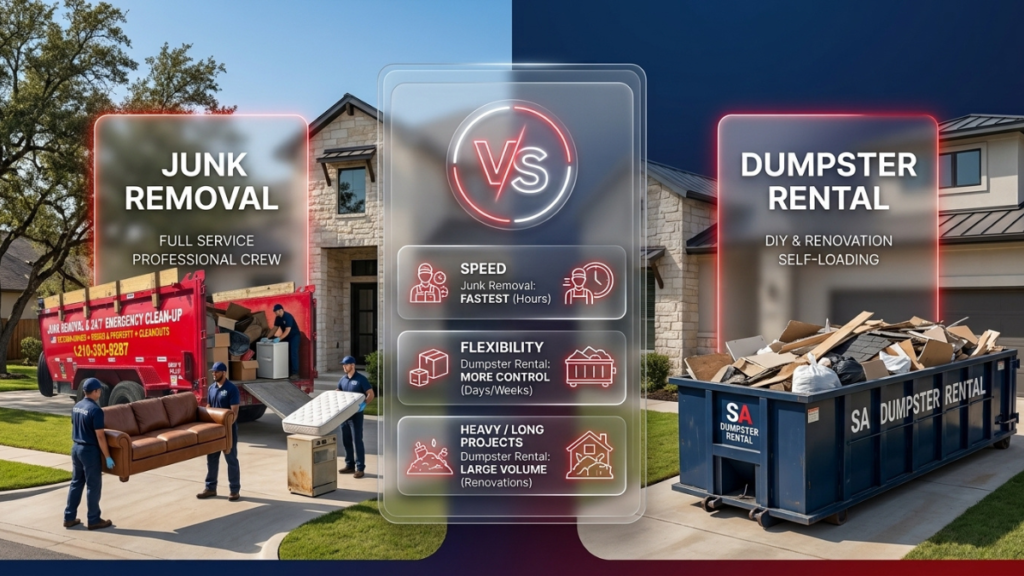
Junk removal fits fast, one-day cleanouts where a crew loads and hauls everything for you. Dumpster rental fits longer projects where debris builds up over days or weeks. Choose junk removal for furniture, appliances, and estate cleanouts. Choose a roll-off dumpster for remodels, roofing tear-offs, and heavy construction debris.
KEY TAKEAWAYS
- Junk removal includes the labor. Our crew loads, lifts, and hauls, so you never touch the heavy items.
- Dumpster rental gives you time. The container stays on site while you work at your own pace.
- Junk removal pricing follows truck volume. Dumpster pricing follows container size, rental days, and tonnage.
- Heavy debris like concrete, tile, and roofing shingles usually costs less in a roll-off dumpster.
- Big cleanouts often need both. A dumpster handles the bulk while a crew handles sorting and heavy lifting.
You are standing in a packed garage, and you have no idea who to call. Maybe it is a rental unit that needs to turn over by Friday. Maybe a remodel just started, and the debris pile keeps growing. The choice between junk removal vs dumpster rental turns on one question. Who does the loading?
We run both services across San Antonio and the surrounding Texas communities. Some days our crew clears a two-story home in three hours. Other days we drop a roll-off container and return two weeks later. Therefore, we see exactly where each option saves money and where it wastes it.
This guide walks you through both services side by side. You will see how pricing actually works and what each dumpster size holds. City placement rules come next. Most importantly, you will know which option matches your project before you call.
Junk Removal vs Dumpster Rental: The Short Answer
Both services get waste off your property. However, they solve very different problems. The table below shows the practical differences at a glance.
| Factor | Junk Removal | Dumpster Rental |
|---|---|---|
| Who loads the junk | Our crew does all lifting and hauling | You and your helpers load it |
| Time involved | Usually 1 to 3 hours, often same day | Sits on site for days or weeks |
| Pricing model | Based on truck volume and labor | Flat rate by size and rental period |
| Space required | None, truck parks briefly at the curb | Driveway or approved street space needed |
| Best project length | One-day cleanouts and single-visit hauls | Multi-day or ongoing projects |
| Heavy debris like concrete or roofing | Possible, but weight limits apply | Better fit, but watch tonnage caps |
| Typical projects | Furniture, appliances, garage and estate cleanouts | Remodels, roofing tear-offs, construction sites |
That covers the overview. Now here is how the choice plays out on real San Antonio jobs.
When Junk Removal Is the Better Choice
Junk removal wins when labor is your biggest problem. You point at the pile, and it disappears. Specifically, book a crew when any of these apply:
- You cannot lift heavy items safely, or you simply do not want to.
- Your driveway is too small, or your HOA bans containers.
- The job finishes in a single visit, such as a garage or attic clearout.
- The load mixes furniture, boxes, appliances, and yard waste together.
- You need the space clear today, not next week.
- Some items should go to donation instead of a landfill.
Here is a job we see almost weekly. A landlord gets keys back on Monday. The tenant left a sofa, a broken fridge, and eight trash bags. A crew clears it in ninety minutes. As a result, the unit gets listed the same afternoon.
When Dumpster Rental Is the Better Choice
Dumpster rental wins when your project runs long or is heavy. You control the schedule, and the container waits for you. Consider a roll-off when:
- The work spreads across several days or several weeks.
- You already have a crew, a contractor, or willing family members.
- The debris is heavy and uniform, such as shingles, tile, or drywall.
- You cannot predict when each load will be ready.
- You want one flat price instead of multiple hauling trips.
Remodels are the clearest case. Demolition happens on day one, and cabinets come out on day four. Without a container on site, that debris sits in your yard. Consequently, most contractors default to a dumpster and never look back.
Why You Don’t Have to Choose Between Two Companies
Plenty of homeowners call three numbers before they find the right service. That wastes an afternoon. At American Valor Waste & Disaster Services, we run crews and containers under one roof. Therefore, one call sorts it out.
If you describe the project, we tell you honestly which option costs less. Sometimes that answer is a crew. Sometimes it is a roll-off dumpster rental in San Antonio. Occasionally it is both, and we will explain why.
So how does each service actually work once you book it? Start with the crew.
How Junk Removal Works in San Antonio
Junk removal: a service where a crew loads your unwanted items and hauls them away. Disposal, donation, and recycling all happen after pickup.
You do not rent equipment. You do not touch a shovel. The price covers labor, transport, and disposal fees together.
What Happens on Junk Removal Day
The process stays simple from start to finish. Most jobs follow these five steps:
- You book a window, and we confirm the address and the item list.
- The crew arrives, walks the site with you, and reviews what goes.
- You get a firm price based on the truck space your items will fill.
- The crew loads everything, then sweeps the area clean.
- We haul the load out and sort it for donation, recycling, or the landfill.
Notice what is missing from that list. You never carry anything to the curb. Additionally, the price gets confirmed before any lifting starts, so nothing surprises you at the end.
What Junk Removal Crews Will and Won’t Take
Crews take almost everything a household or office produces. Common loads include:
- Couches, mattresses, tables, dressers, and office furniture.
- Refrigerators, washers, dryers, water heaters, and stoves.
- Televisions, computers, printers, and small electronics.
- Boxes, clothing, toys, and general household clutter.
- Fence panels, small demolition debris, and brush piles.
- Hot tubs, sheds, playsets, and above-ground pool frames.
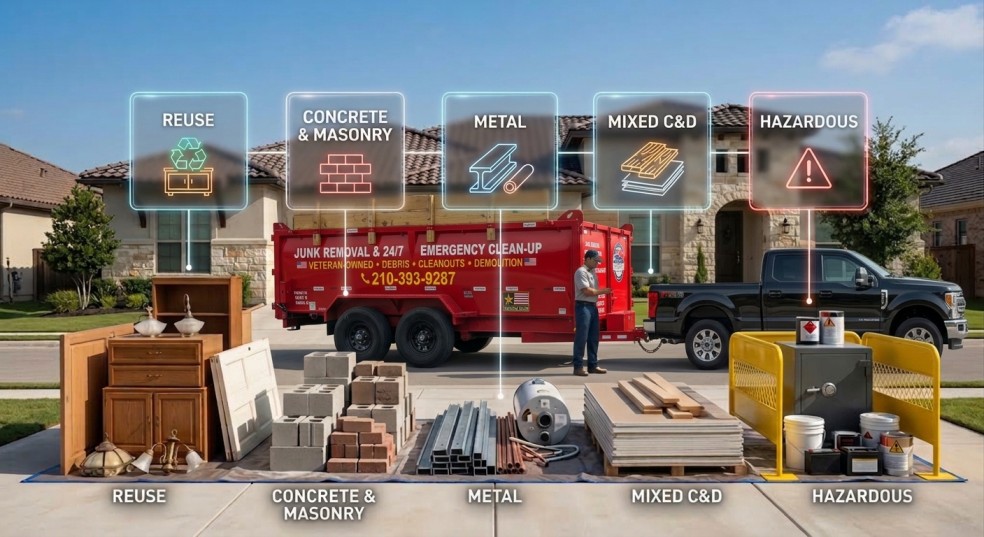
Some items need special handling instead. Paint, motor oil, pesticides, and car batteries count as household hazardous waste.
The Texas Commission on Environmental Quality oversees hazardous household waste rules statewide. Consequently, those materials belong at a city drop-off event, not on a truck. Tires, propane tanks, and asbestos also fall outside a standard load.
Now compare that to the container side of the business, where you set the pace.
How Roll-Off Dumpster Rental Works in San Antonio
Roll-off dumpster: an open-top steel container that a truck drops at your property. You fill it, and we haul it away.
From Delivery to Pickup: The Rental Process
The rental cycle has four stages. Each one has a small detail that affects your final bill:
- Delivery. You pick the size and the drop spot, and we place the container.
- Loading. You fill it over your rental period, keeping debris level with the top rail.
- Pickup. You call when you finish, or we collect it on the scheduled date.
- Weigh-in. The load gets weighed at the disposal site, and tonnage overage gets billed.
That fourth step surprises people most often. Ask about the included tonnage before delivery, not after pickup.
Dumpster Sizes and What Each One Holds
Size choice drives your price more than anything else. The table below shows how the common sizes compare.
| Size | Roughly Equals | Best Fit |
|---|---|---|
| 10 yard | 3 pickup truck loads | Small bath remodel, concrete, dirt, and heavy material |
| 15 yard | 4 to 5 pickup loads | Single room remodel or a full garage cleanout |
| 20 yard | 6 pickup loads | Most single-family roof tear-offs and flooring jobs |
| 30 yard | 9 pickup loads | Large remodels, new builds, whole-home cleanouts |
| 40 yard | 12 pickup loads | Bulky but light debris, commercial projects |
One rule saves money here. Going one size up costs far less than a second haul. However, heavy material like concrete belongs in a small container. Weight fills the limit long before the space runs out.
Rental Periods and Weight Limits
Most local rentals include a set number of days, commonly seven to fourteen. Extra days usually bill at a daily rate. Ask for that number up front.
Weight works the same way. Providers include a tonnage allowance, often two to four tons depending on size. Anything past that allowance bills per ton, because landfills charge by weight.
Why does that matter so much? Roofing shingles from an average home can weigh more than three tons. Therefore, a container that looks half empty may already sit at its cap.
Where You Can Place a Dumpster in San Antonio
Placement rules trip up first-time renters. Keep these points in mind:
- A private driveway is the easiest and cheapest option, with no permit needed.
- Street placement may require a permit from the city, so confirm before delivery.
- Plywood under the wheels protects pavers, stamped concrete, and fresh asphalt.
- The truck needs roughly 60 feet of clearance and 23 feet of vertical space.
- Low branches, irrigation heads, and gas meters all limit the drop spot.
- HOA and condo associations often set their own limits on container placement.
Rules change by street and by neighborhood. You can verify current requirements with the City of San Antonio Solid Waste Management Department. Do that before your delivery date, not after.
With the logistics settled, the next question is the one everyone asks first. What does it cost?
Cost Comparison: Junk Removal vs Dumpster Rental in San Antonio
Neither service has one flat price. Instead, each uses a different formula. Understanding both formulas tells you which one favors your project.
How Junk Removal Pricing Is Calculated
Junk removal prices follow volume in the truck. Crews quote by fraction. Options include a minimum load, a quarter truck, a half truck, or a full truck.
Three factors move the number. Volume comes first. Weight comes second, since tile costs more to dump than boxes. Access comes third, because a third-floor walkup takes longer than a curbside pile.
The quote includes labor and disposal. As a result, you pay one number and walk away.
How Dumpster Rental Pricing Is Calculated
Dumpster pricing starts with a flat base rate. That rate bundles four things together:
- Delivery and pickup of the container.
- The rental period, usually measured in days.
- An included tonnage allowance for the load.
- Standard landfill or transfer station fees up to that allowance.
Anything past the base rate is billed separately. Extra days, extra tons, and prohibited items all add to the total. Still, for long projects, the flat rate usually wins on cost.
Labor-Included Pricing vs DIY Disposal Costs
A dumpster looks cheaper on the invoice. That comparison misses several real costs, though.
Count what loading actually takes. You may need two helpers for a full day. Add a truck to move items from the backyard. Add dolly rental for appliances. Add your own weekend.
Here is a practical example from a Northeast Side garage job. The homeowner priced a 20 yard container and figured he would save money. Then he counted three days of his own labor. He booked the crew instead and kept his Saturday.
The honest rule sounds like this. If you will not be doing the loading yourself, junk removal usually costs less overall.
Extra Fees That Change Your Final Price
Both services carry add-on charges. Ask about these before you book:
- Tonnage overage on a dumpster, billed per extra ton.
- Extra rental days past the included period.
- Appliance fees for units holding refrigerant, which needs certified recovery.
- Mattress and tire disposal, which many landfills charge separately.
- Blocked-access or trip fees when a truck cannot reach the container.
- Prohibited item charges if hazardous waste ends up in the load.
Money aside, the day-to-day experience of each option differs sharply.
Labor, Time, and Convenience Comparison
Cost gets the attention, but labor decides most projects. Ask yourself who will carry the heavy items down the stairs.
Who Does the Loading and Heavy Lifting
With junk removal, the crew handles everything. Two workers arrive with a truck, straps, dollies, and gloves. They disassemble bed frames and carry appliances down narrow halls.
With a dumpster, that job belongs to you. You set the pace, but you also carry the weight. For contractors, this works fine, since loading already fits the workflow.
Safety deserves a mention too. Furniture and appliances cause plenty of back injuries and pinched fingers. Crews do this daily and carry insurance for it.
Same-Day Removal vs Multi-Week Project Timelines
Timelines separate the two services cleanly. Junk removal often finishes within hours of your call, and many jobs happen the same day.
Dumpster rental runs on a longer clock. Delivery usually happens next business day, and the container stays through your project.
Match the tool to the timeline. A closing deadline calls for a crew. A six-week kitchen remodel calls for a container.
Which Option Fits Your San Antonio Cleanout Project
Most projects fall into a clear category. Find yours in the table below.
| Project Type | Better Option | Why |
|---|---|---|
| Garage and household cleanout | Junk removal | Mixed items and bulky furniture, no staging space needed |
| Moving and estate cleanout | Junk removal | Crew sorts and hauls in one visit, donations handled |
| Rental property turnover | Junk removal | Fast turnaround keeps the unit rentable |
| Appliance and furniture pickup | Junk removal | Single-item or small-load jobs do not justify a dumpster |
| Kitchen or bath remodel | Dumpster rental | Debris builds up over days or weeks of work |
| Roofing tear-off or construction debris | Dumpster rental | High volume, heavy material, continuous loading |
| Yard waste and storm cleanup | Depends on volume | Small brush piles suit junk removal, large tree work suits a dumpster |
| Hoarding or full-property cleanout | Both together | Dumpster for bulk, crew for sorting and heavy items |
Storm cleanup deserves one extra note. After a Texas hail season, roof debris and downed limbs often arrive together. That mix usually points toward a container.
When Using Both Services Together Makes Sense
Some jobs need a crew and a container at once. Hoarding cleanouts top that list.
The reason is simple. Sorting takes trained hands, because paperwork, valuables, and medication hide inside the clutter. Meanwhile, the sheer volume needs a 30 or 40 yard container parked on site.
Full-property cleanouts and fire or water damage jobs follow the same pattern. We stage a container in the driveway, then work room by room with a crew. Consequently, the property clears in days instead of weeks.
Once the load leaves your property, where does it actually go?
Disposal, Recycling, and Items That Need Special Handling
Disposal is the part most people never see. It also explains why certain items cost more.
Where Your Junk Actually Ends Up With Each Option
With junk removal, sorting happens after pickup. Usable furniture goes to donation partners. Metal goes to scrap. Electronics go to e-waste recycling. Only the remainder reaches the landfill.
With a dumpster, the load travels as one mixed unit. Some transfer stations sort it further, and clean single-material loads recycle well. Shingles, concrete, and metal all have recycling markets in Texas.
Volume here is larger than most people expect. The U.S. Environmental Protection Agency counted about 600 million tons of construction and demolition debris in 2018. That is more than twice the household waste total. In addition, the agency reports a national recycling and composting rate near 32 percent.
Sorting matters, in other words. A separated load often costs less to dump than a mixed one.
Items Neither Option Can Take Without Special Arrangements
Some materials stay off the truck and out of the container. Federal and state rules control them. Plan separately for:
- Paint, solvents, motor oil, pesticides, and pool chemicals.
- Car batteries, fluorescent tubes, and mercury thermostats.
- Propane tanks, fuel cans, and other pressurized containers.
- Asbestos siding, insulation, or floor tile, which needs licensed abatement.
- Medical waste, needles, and prescription medication.
- Tires and refrigerant appliances, which carry separate handling fees.
San Antonio residents can use city household hazardous waste drop-off options for most of these. Ask us, and we will point you to the right place. Getting this wrong triggers fines and rejected loads.
Frequently Asked Questions
Can I get same-day junk removal in San Antonio?
Yes, same-day service is often available when you call early. Availability depends on crew schedules and your location in the metro area. Morning calls have the best odds. Larger jobs may need a next-day slot so we can send enough crew and truck space.
What happens if I overfill my dumpster?
Debris must sit level with the top rail. Overfilled containers are unsafe to transport. The driver may refuse pickup until you remove the excess. Delays and trip fees often follow. Loads over the included tonnage are billed per extra ton at the disposal site rate.
Can I use a dumpster and junk removal for the same project?
Absolutely, and many large jobs work best that way. We often place a container for bulk debris. Meanwhile, a crew handles the sorting, appliances, and heavy furniture. Hoarding cleanouts, estate clearouts, and damage restoration jobs use this combination regularly. One call sets up both services together.
Do I need to be home during a junk removal appointment?
Someone should be present at the start to approve the item list and the price. After that, you do not need to supervise the loading. For some jobs, we can work from photos and written approval instead. Just confirm access arrangements when you book.
Which option works better for an apartment or condo cleanout?
Junk removal fits almost every time. Apartments rarely have space for a container, and most properties restrict placement. Crews carry items downstairs and through hallways without blocking shared areas. In addition, the job finishes in one visit, which keeps management and neighbors satisfied.
Get Your San Antonio Cleanout Handled the Right Way
The choice between junk removal vs dumpster rental comes down to labor, timeline, and debris type. Junk removal clears a property fast, with no lifting on your end. Dumpster rental gives you a container and the time to fill it. Heavy, ongoing projects usually favor the container.
You do not have to guess which one fits. American Valor Waste & Disaster Services runs crews and roll-off containers across San Antonio and Texas. Because we offer both, we have no reason to push the wrong service. We simply price the option that costs you less.
Tell us about your project, and we will recommend the right approach in one call. Ask us for a free quote on junk removal and cleanout services in San Antonio. You can also reserve a container for your next remodel. We will confirm pricing, tonnage, and timing before anything arrives. Reach out today, and we will get your space clear.